

Brian Haratsis
Chief Executive Officer
Founded Macroplan in 1985. Author of six books on Australia’s cities, and a Fellow of the Planning Institute of Australia.

How could technology change where we live and work?
An exploration of artificial intelligence, renewable energy and the possibilities ahead for our cities and regions.
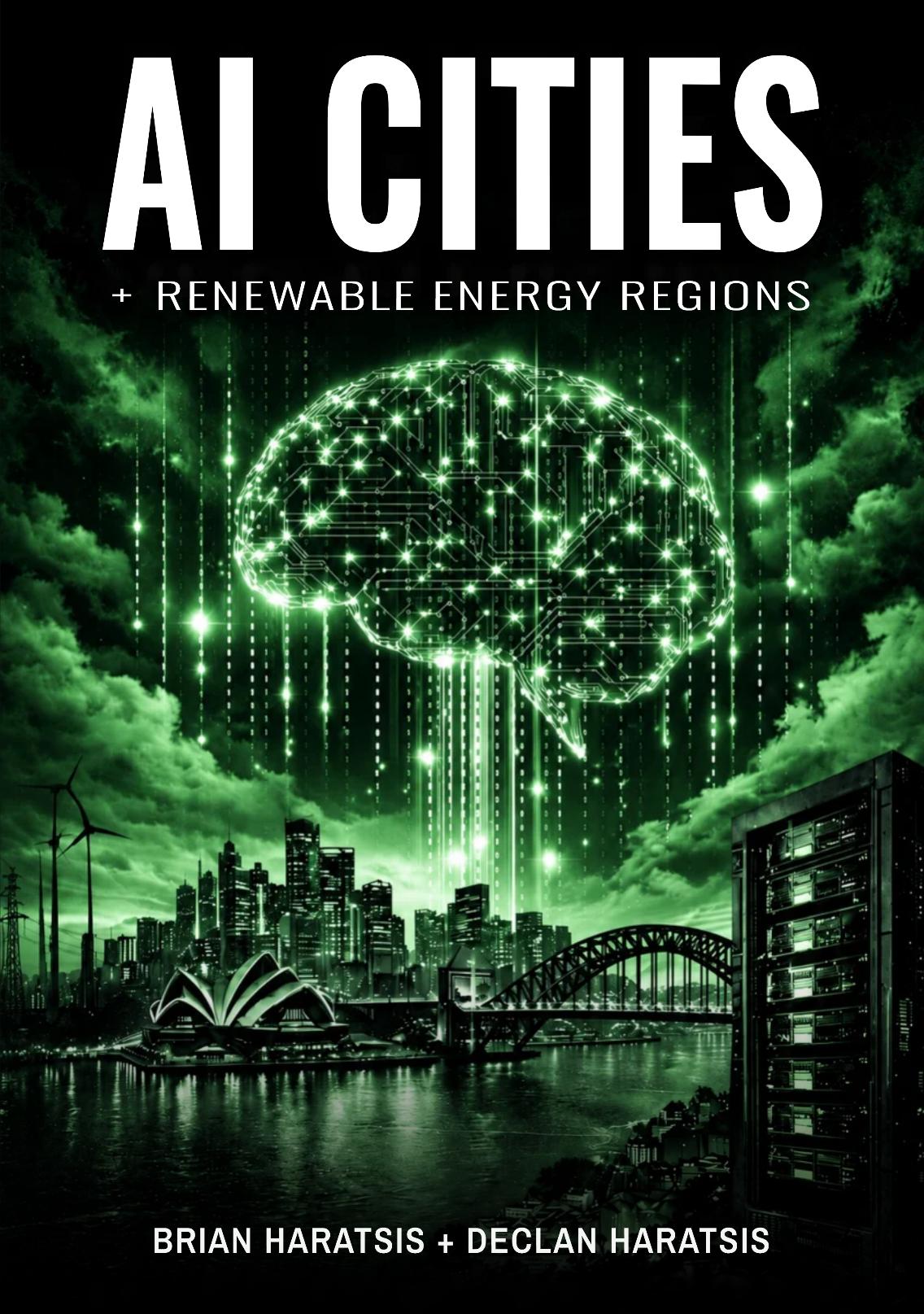
AI Cities explores how remote work and digital services could alter the relationship between households and city centres.
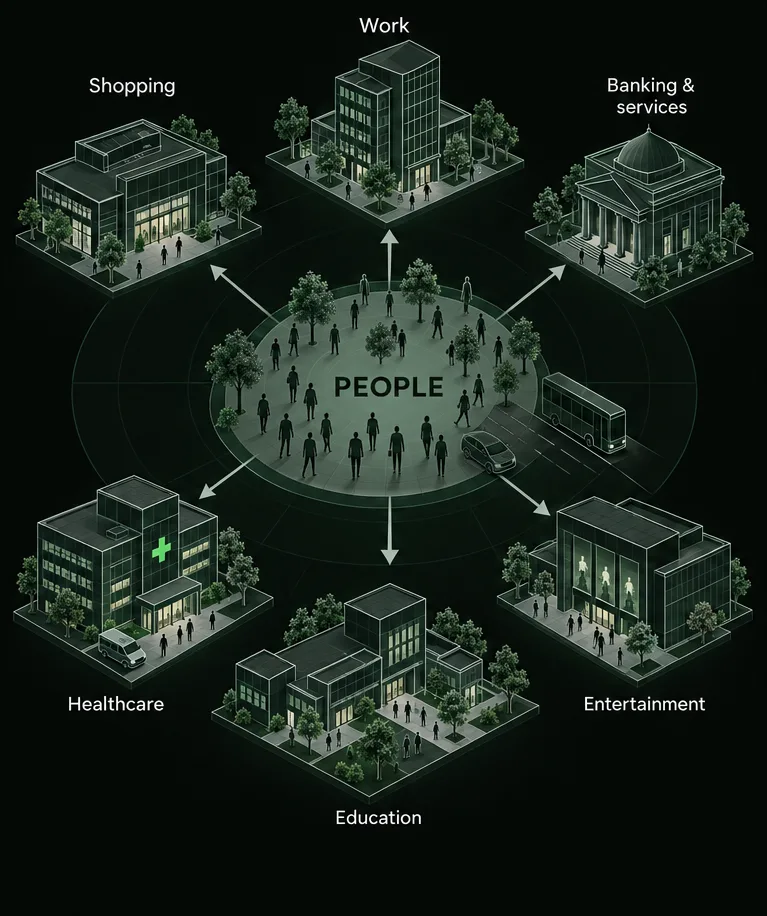
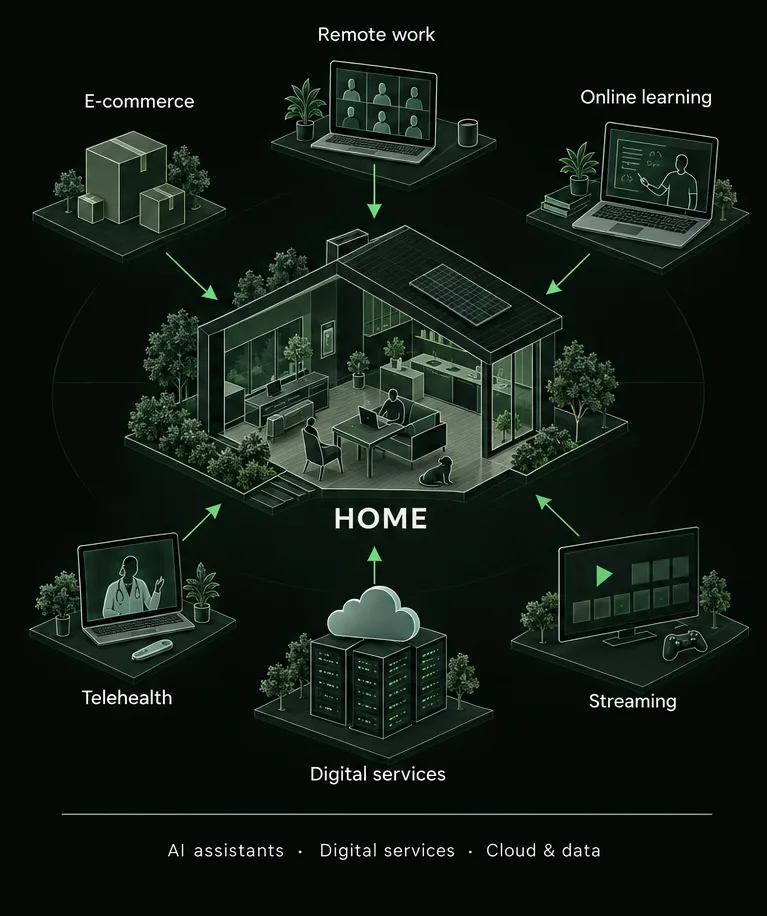
“The twentieth century was organised around moving people to jobs. The AI City is organised around moving knowledge to wherever it creates the greatest value.”
Bring the right perspectives together.
Different disciplines, connected early enough to shape the thinking.
Make the relationships visible.
Economics, movement, land use and infrastructure. Separate the layers, understand the relationships, then bring the bigger picture into focus.
A place holds more than one possibility.
Question the assumptions. Explore different uses, connections and patterns of demand. Give the next decision room to be different.

 Ripley Valley, QLD
What would it take to open up land with no road and no services?
2,3002,300residential lots
A $15M catalyst loan for a new 2 km entrance road brought delivery forward 10–15 years.
 Melbourne CBD, VIC
Can one city block stack retail, offices and homes?
≈600≈600apartments above three levels of retail
Macroplan’s research made the case for a vertical, mixed-use centre, which reports extremely high trading performance at both Woolworths and Big W.
 Australia-wide
What share of Australians can readily reach a pharmacy?
5,8005,800community pharmacies assessed
Demonstrated that the pharmacy location rules give Australia a national network of pharmacies that optimises the community’s access to prescription pharmaceuticals.
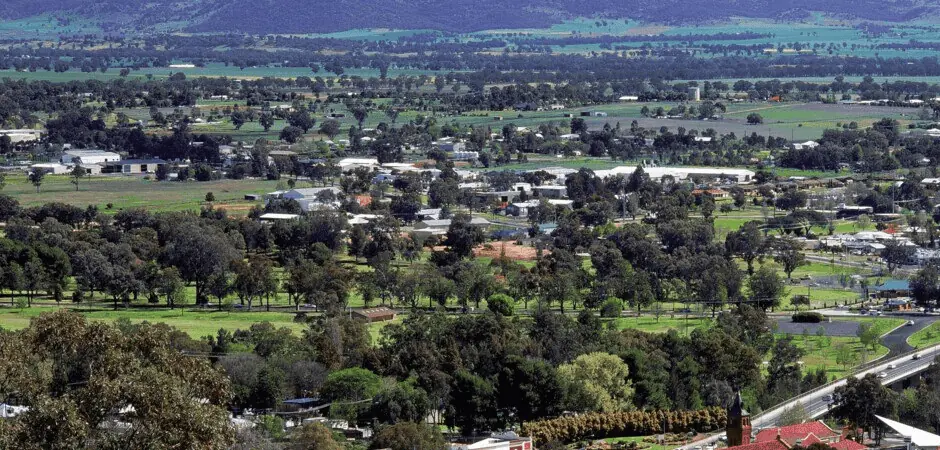 Hunter Region, NSW
Where are the region’s businesses, and what could decarbonisation mean for them?
Businesses, zoning, investment and major projects in one online map, to assist government and industry decision making about decarbonisation.
 South-west Sydney, NSW
Which development scenarios stay viable under Council’s contributions schemes?
22large mixed-use developments tested
Analysed the profitability impacts of Council’s development contributions schemes, as part of Aland’s ongoing negotiations with Council.
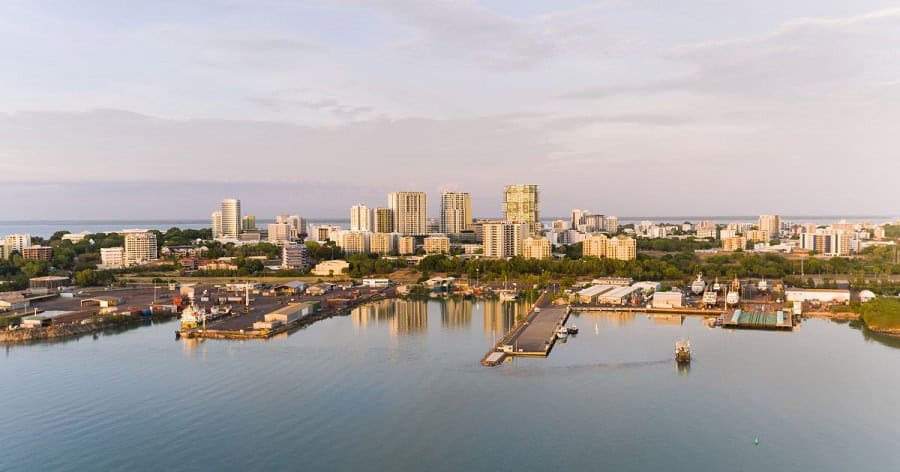 Greater Darwin, NT
How much retail floorspace will a growing region need, and where?
Confirmed the scale and hierarchy of centres for the Palmerston growth corridor.
“We are economists, analysts, planners and problem solvers. We consider challenges through an alternative lens.”
Macroplan
More than 40 years of solving problems and shaping cities.
Brian Haratsis leaves the Victorian State Government to start his own property economics and planning consultancy, in North Melbourne.
Macroplan becomes a national consultancy, with offices in Australia’s major capital cities.
One national team of economists, analysts, planners and problem solvers.
Chief Executive Officer
Founded Macroplan in 1985. Author of six books on Australia’s cities, and a Fellow of the Planning Institute of Australia.

Chief Operating Officer
An urban economist with almost 30 years’ experience, including senior roles at the ABS, the Victorian Department of Treasury and Finance and KPMG.
 Jim TsirimiagosActing General Manager, NSWSenior Management
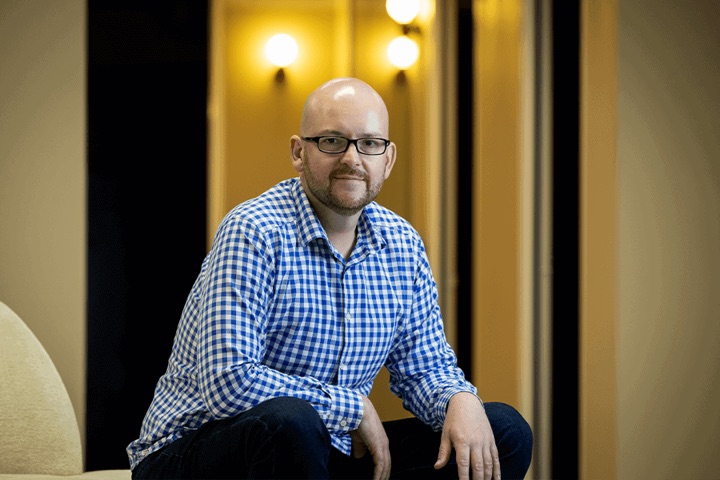 Ian ChurchillGeneral Manager, RetailSenior Management
 Declan HaratsisGeneral ManagerSenior Management
 Estella ZhangManager Urban Economics & Property ResearchEngagement Managers
 Richard LeManager, Data Analytics & ResearchEngagement Managers
 Damian TanSenior Consultant, Economics & Property ResearchConsultants & Analysts
 Brianna CooperExecutive Assistant to the Chairman & CEOBusiness Services
 Mohd Hafiz SairiGIS ManagerBusiness Services
 Rachel MulderAccounts ReceivableBusiness Services
 George AlexiouIT ManagerBusiness Services
Map data: City of Melbourne, Vicmap (State of Victoria), CC BY 4.0
Our offices
Recent thinking
 3 March 2025Impacts of AI on the Property Industry Data centres, energy and productivity: what artificial intelligence means for property.
 21 November 2024Urban Artificial Intelligence – Planning for the Age of Tech The core technologies, mapped onto locations, processes, products and projects.
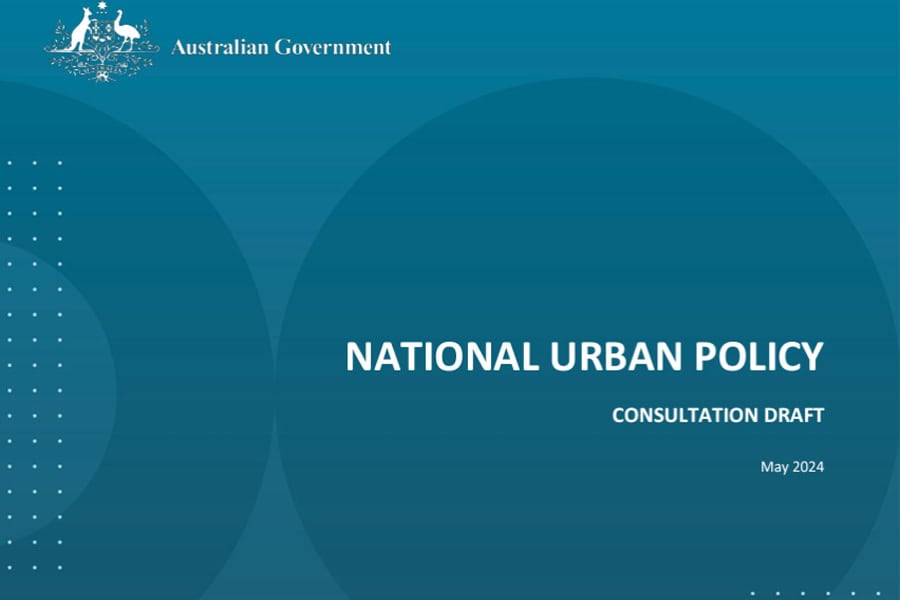 4 September 2024National Urban Policy – a review “The draft NUP leaves much to be desired.”
Previous books by Brian Haratsis